
Biblioteca Semitica
ISSN: 3101-5646
Bibliotheca Semitica está concebida como una serie de alta divulgación orientada a acercar al público general y al ámbito formativo (especialmente estudiantes universitarios) obras fundamentales de los estudios semíticos. Su objetivo principal es poner a disposición del lector no especializado textos clásicos de referencia mediante traducciones cuidadas, accesibles y acompañadas de los recursos necesarios para su adecuada comprensión en lengua española.
La colección acoge traducciones de estudios influyentes en el ámbito de las lenguas y culturas semíticas —hebreo, arameo, árabe, siriaco, entre otras—, seleccionados por su relevancia histórica y su impacto en la configuración de la disciplina. Bibliotheca Semitica busca tender un puente entre la investigación especializada y el lector interesado, favoreciendo la difusión del conocimiento filológico, histórico y cultural del mundo semítico. En este sentido, la colección contribuye a la formación académica básica y al enriquecimiento cultural, proporcionando herramientas fiables para la comprensión de una tradición intelectual de gran relevancia en la historia de las humanidades.
Bibliotheca Semitica is conceived as a high-level outreach series aimed at bringing foundational works in Semitic studies to a broader readership, including the general public and the educational sphere (particularly university students). Its principal objective is to make available to the non-specialist reader key classical texts through carefully produced, accessible translations, accompanied by the necessary resources for their proper understanding in the Spanish language.
The series includes translations of influential studies in the field of Semitic languages and cultures, Hebrew, Aramaic, Arabic, Syriac, among others, selected on the basis of their historical significance and their impact on the development of the discipline. Bibliotheca Semitica seeks to bridge the gap between specialised research and the interested reader, promoting the dissemination of philological, historical, and cultural knowledge of the Semitic world. In this respect, the series contributes to foundational academic training and cultural enrichment, providing reliable tools for understanding an intellectual tradition of considerable importance in the history of the humanities.
Mostrando los 7 resultadosOrdenado por los últimos
-
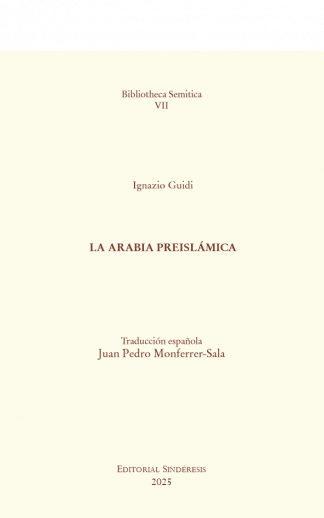
La arabia preislámica
30,00€ Añadir al carrito -

Una antigua traducción siriaca del Corán con nuevos versículos y variantes
30,00€ Añadir al carrito -

Los príncipes Ġassāníes de la casa de Ǧafnah
30,00€ Añadir al carrito -

Leyendas Cristianas en la tradición Islámica
25,00€ Añadir al carrito -

Apocalipsis Judíos y Cristianos
30,00€ Añadir al carrito -

Traducciones de los evangelios arameos originales
30,00€ Añadir al carrito -

Libro de los ídolos
30,00€ Añadir al carrito
Mostrando los 7 resultadosOrdenado por los últimos